

2025 Inductees
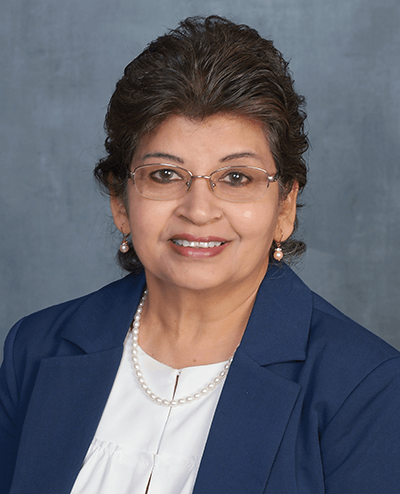
Subhra Mohapatra, Ph.D.
Professor, Molecular Medicine
University of South Florida
Research Career Scientist
James A. Haley Veterans Hospital
27 U.S. Patents
Subhra Mohapatra, Ph.D., is a Professor of Molecular Medicine at the University of South Florida (USF) Morsani College of Medicine and a Research Career Scientist at the James A. Haley Veterans’ Hospital in Tampa, Florida. She is also the co-founder of Transgenex Nanobiotech, a company focused on cancer stem cell-targeted therapeutics, and the co-founder of Agile Diagnostics (ADX), Inc., which develops rapid diagnostic technologies.
With an interdisciplinary background in chemistry, immunology, and molecular engineering—and a career spanning more than 25 years—Dr. Mohapatra has built a world-class research program at USF and the VA. Her work has significantly advanced cancer research, regenerative medicine, and neurotherapeutics, helping shape the evolving landscape of precision medicine. Most notably, Dr. Mohapatra’s pioneering nanofiber-based tumoroid culture systems—including tumor-on-a-disc and the four-dimensional perfused tumor-on-a-chip technologies—have revolutionized how cancer is modeled in the lab, offering new hope for personalized treatments. These platforms allow for the growth of patient-derived tumors that retain the genetic and pathological features of the original cancer, enabling precise testing of therapies tailored to individual tumor profiles.
In addition to transforming translational bench-to-bedside cancer research, Dr. Mohapatra’s scientific innovations extend to complex neurological disorders and public health crises. She developed a novel nose-to-brain nanodrug delivery system with potential applications for brain tumors and neurodegenerative diseases such as Alzheimer’s, Parkinson’s, and Huntington’s disease. Her research was among the first to demonstrate how COVID-19 (SARS-CoV-2) infection may influence gene expression associated with Alzheimer’s disease, illuminating the potential long-term neurological consequences of COVID-19.
Beyond her academic research, Dr. Mohapatra is also an inventor-entrepreneur. As co-founder of Agile Diagnostics (ADX), Inc., she led the development of a game-changing, ultra-rapid detection technology that is capable of detecting viral antigens, including COVID-19, in under a minute. Unlike traditional antibody-based tests, this system boasts high sensitivity and resilience against emerging variants, with the potential to transform diagnostic access globally. She also founded Transgenex Nanobiotech to advance cancer stem cell-focused therapeutics and diagnostics, translating her discoveries into technologies that are actively shaping cancer drug development, delivery, and testing.
Dr. Mohapatra holds 27 U.S. Patents. She is an elected Fellow of the American Association for the Advancement of Science (AAAS), the American Institute for Medical and Biological Engineering (AIMBE), and the National Academy of Inventors (NAI). She has received numerous awards, including multiple VA Merit Review Awards and the prestigious Biomedical Laboratory Research and Development (BLR&D) Research Career Scientist Award in 2018. She also serves as Academic Editor for PLOS One, and she was awarded the PLOS One Editorial Board Long Service Award in 2023.
Dr. Mohapatra earned her B.S. and M.S. in Chemistry from Utkal University in India. She received a Master’s in Information Systems (M.I.S.) from McGill University in Canada and completed her Ph.D. in Immunology at the University of Manitoba.
A MENTION ABOUT INVENTION – 3 Questions for the Inventor
Q1. Of your patents/inventions, which one is your favorite and why?
Of all my patents, the one I hold dearest is the ‘tumor-on-a-disc’ platform, also known as the tumoroid platform. In fact, this innovation has evolved into a family of patents over time.
Tumors are incredibly complex, consisting of a diverse mix of cancerous and non-cancerous cells. As a result, discovering effective anti-cancer drugs using only traditional cancer cell cultures has proven insufficient. Although this limitation has been recognized for over two decades, most existing solutions are either too complex or prohibitively expensive.
Interestingly, this breakthrough emerged serendipitously during a completely unrelated project on stem cell differentiation. One of my graduate students discovered that when cancer cell lines or tumor biopsies were cultured on a unique nanofiber matrix, they formed three-dimensional tumor-like structures—what we now call tumoroids.
These ‘tumor-on-a-disc’ and our enhanced ‘tumor-on-a-chip’ technologies have wide-ranging applications, particularly in i) Drug discovery, especially for resistant cancers; ii) Personalized cancer treatment, enabling the selection of the right drug and dosage for individual patients.
This invention has laid the foundation for numerous research projects, supported the work of several graduate students and postdoctoral fellows, and resulted in 6 U.S. patents and 2 international patents (Japan and Australia) from USF and 3 patents from our company, including two pioneering ones.
It has also attracted millions of dollars in research funding from the Florida Department of Health and the National Institutes of Health, including SBIR and STTR grants. Moreover, our efforts to market the nanomatrix for drug discovery research in Japan, India, and the U.S. have been met with great success.
Q2. What inspired you to become an inventor/innovator?
My father was a scientist, and my mother is a social worker. From a young age, my parents noticed my curiosity—I would often take apart toys just to see how they worked, then try to put them back together. I’ve always had a natural inclination toward taking risks and never feared failure.
My upbringing instilled in me the belief that “the whole world is one family.” This value shaped my perspective: what truly matters is not what I achieve for myself, but what I can contribute to others and to society. I credit my parents entirely for nurturing my motivation and desire to make a meaningful impact—whether social, scientific, or economic.
I’ve also been fortunate to be surrounded by innovators, including my father and my husband, Dr. Shyam Mohapatra, a Florida Inventors Hall of Fame inductee, as well as many inspiring individuals at the USF Chapter of the National Academy of Inventors (NAI).
I became a member of the USF Chapter of the NAI in 2003, a Senior Member in 2019, and a Fellow in 2022. Just as it’s said “it takes a village to raise a child,” I believe “it takes an innovation ecosystem” to successfully translate an idea into a product. The USF Chapter of the NAI has been a cornerstone of that ecosystem.
Serving as Vice President of the USF-NAI in 2019–2020 and President from 2020–2022, I’ve seen firsthand the critical role this organization plays in supporting young faculty and emerging inventors. As an NAI Fellow, I’ve had the privilege of receiving guidance from other Fellows—on everything from startups and legal matters to technical and financial advice. In turn, I’m honored to offer the same support to the next generation of inventors.
Q3. What is your process when developing new inventions/innovations?
While a few of our inventions have emerged serendipitously, my typical approach is rooted in purpose-driven innovation. I encourage my team—students and staff alike—to begin by identifying the most pressing unmet needs within a specific scientific domain. Innovation, in my view, starts with asking the right questions.
When we encounter an unexpected observation during a project, I urge my team to pause and ask: Why did this happen? What does it mean? How can we explore it further? These questions often lead us down new and exciting paths of discovery.
I also believe in recognizing every contributor. Anyone who plays a role in the conception of an invention is always included as a co-inventor on the patent application. Innovation is a collaborative journey, and I strive to foster a culture where curiosity, critical thinking, and shared credit are at the heart of everything we do.