

2025 Inductees
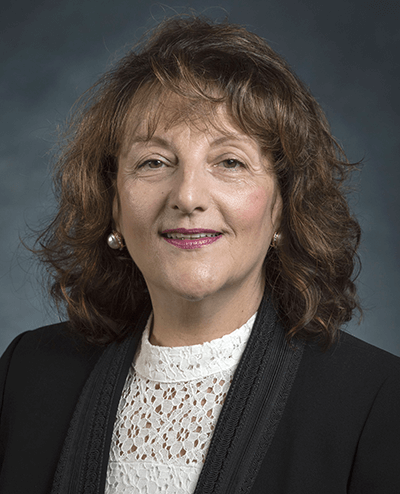
Cleopatra “Cleo” Cabuz, Ph.D.
Vice President of Technology and Partnerships (Retired)
Honeywell Safety and Productivity Solutions
59 U.S. Patents
Cleopatra “Cleo” Cabuz, Ph.D., is the retired Vice President of Technology and Partnerships for Honeywell’s Safety and Productivity Solutions, a $6 billion division of Honeywell International. In this role, she was instrumental in steering the division’s advanced technology portfolio, accelerating innovation, and fostering strategic partnerships. Prior to this, she served as Vice President of Engineering and Chief Technology Officer for Honeywell’s Industrial Safety business. Over her 23-year tenure at Honeywell, Dr. Cabuz progressed from Principal Research Scientist in Honeywell Corporate Labs to various leadership roles, consistently driving technological advancement.
With a career spanning both industry and academia, Dr. Cabuz has made significant contributions to engineering research, capability development, and leadership. Her work on Micro-Electro-Mechanical Systems (MEMS) actuators led to the invention of a new family of ultra-low-power, cost-effective, polymer-based electrostatic actuators with rolling contacts. These innovations have been pivotal in developing valves, pumps, and artificial muscles used in advanced medical technologies. Notably, her design of rolling contacts reduced actuation voltage requirements while enhancing displacement and stability. Her extensive patent portfolio includes groundbreaking structures such as the Dual Diaphragm Pump, Active Surfaces, and the Artificial Muscle.
Dr. Cabuz’s research also extended into integrated systems for chemical and biological analysis. She led multidisciplinary teams in developing and demonstrating systems like the MesoSniffer, a portable landmine detection device, and the Micro Cytometer for blood analysis. She invented and demonstrated the first handheld flow cytometer capable of performing complete blood counts, a test conducted approximately two billion times annually worldwide. Her innovations in miniaturized flow cytometry, including disposable cartridges, laid the foundation for the ImmuneIQ product line, enabling point-of-care diagnostics for immune diseases.
Dr. Cabuz holds 59 U.S. patents. In 2017, she was elected to the National Academy of Engineering for her contributions to sensors, MEMS technologies, and the development of industrial and safety products. She served as Executive Director of the MEMS Industry Group from 2003 to 2005 and is an elected Senior Member of the Institute of Electrical and Electronics Engineers (IEEE). Her numerous honors include Honeywell’s 2000 Technical Achievement Award, the 2003 Lion’s Award, and the 2011 Velocity Product Development Award. She is an inductee of both the MEMS Industry Group Hall of Fame and Honeywell’s Inventor’s Hall of Fame. In 2018, Newsweek Romania recognized her as one of the “Top 100 Romanians from Abroad” during Romania’s Centennial celebrations.
Dr. Cabuz holds an M.S. in Electronics from Politehnica University of Bucharest in Romania and a Ph.D. in Mechatronics/Microsystems Engineering from Tohoku University in Japan.
A MENTION ABOUT INVENTION – 3 Questions for the Inventor
Q1. Of your patents/inventions, which one is your favorite and why?
My preferred invention is Patent US-6597438-B1, Portable Flow Cytometry, an instrument capable of providing a complete blood cell count from a single drop of blood, in a portable format.
“A portable or wearable cytometer that can be used at remote locations, such as in the field or at home. The flow cytometer of the present invention may help improve the healthcare of many weak, sick, or elderly people by providing early detection of infection. By detecting infection early, it may be more readily treatable. In military applications, the portable cytometer of the present invention may help save lives by providing early detection of infection due to biological agents.”

This invention holds particular significance for me. My father was a hematologist who established the first transfusion center in our part of the country, back in Romania. I grew up looking through the microscope as he identified and counted different cells, and I loved seeing their various shapes and colors. However, I did not want to go to medical school. I was determined to study math and physics and to become an engineer and scientist. Even so, I always looked for opportunities to apply engineering to medicine. The cytometer allowed me to do just that, applying my skills to the very same field my father worked in. It was an incredible feeling, as if I had met my destiny.

Q2. What inspired you to become an inventor/innovator?
From a very early age, I exercised a natural inclination toward introspection and self-evaluation. What do I like? What don’t I like? What do I do with ease and pleasure, and what do I not? Where am I better than others, and where am I not? Nobody pushed me to think this way; it came naturally.
As a child, I would not do things I truly did not care for. I realized how much I love finding new solutions to problems—whether they were math problems or life problems, like figuring out how to get back into our second-floor condo when the door shut behind me.
By secondary school, it was absolutely clear to me that anything requiring only the reproduction of notions would give me no pleasure or interest whatsoever. It had to be something new, different, hard, and challenging.
This is why I signed up for electronic engineering at a time when, in my hometown, people hardly even knew what electronics meant. Family members and teachers tried to convince me to go to medical school or to study physics or chemistry to become a teacher. I was adamantly opposed to anything other than electronics, with a clear focus on research.
Q3. What is your process when developing new inventions/innovations?
My inventions have always started with real problems that needed to be solved. I then identify concepts and technologies that might be leveraged to address the problem, and from there, I stretch these capabilities into uncharted territory—daringly combining them with unique materials, configurations, and electronics.