

2026 Inductees
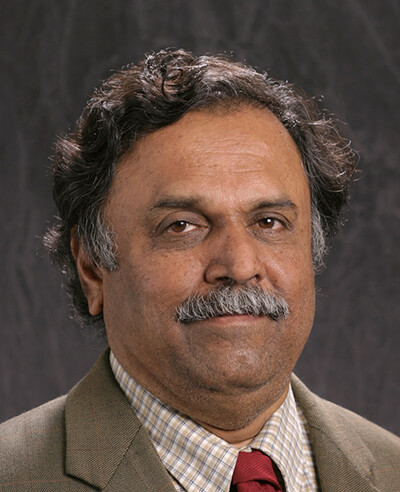
S. S. Iyengar, Ph.D.
Distinguished University Professor and Ryder Professor, Knight Foundation School of Computing and Information Sciences, Florida International University
Director, U.S. Army-Funded Center of Excellence in Digital Forensics, Florida International University
7 U.S. Patents
S. S. Iyengar is a pioneering computer scientist, inventor, educator, and internationally recognized leader in applied computational science, artificial intelligence, sensor fusion, digital forensics, and high-performance intelligent systems. He is Distinguished University Professor and Ryder Professor in the Knight Foundation School of Computing and Information Sciences at Florida International University, where he also serves as Director of the U.S. Army-funded Center of Excellence in Digital Forensics. Over a career spanning more than five decades, Iyengar’s innovations have advanced technologies used in healthcare, national defense, disaster modeling, telecommunications, autonomous systems, and modern computing.
Iyengar is best known as co-inventor of the Brooks-Iyengar Algorithm, a foundational breakthrough in noise-tolerant distributed control and sensor fusion. The algorithm bridged the fields of sensor fusion and Byzantine fault tolerance, providing a method for reliable decision-making across distributed sensor networks even when some data sources are uncertain or faulty. Its impact has extended to national defense systems, telecommunications, distributed computing, maritime monitoring, and critical event detection, influencing technologies used by organizations such as DARPA, NATO, Raytheon, BBN Technologies, Telcordia, Motorola, and the U.S. Navy.
His inventive work also includes technologies for healthcare, disaster resilience, and intelligent systems. Iyengar’s patented context-based algorithmic framework for identifying and classifying embedded images of follicle units has supported advances in hair transplantation and restoration, providing clinicians with improved tools for analyzing follicle distribution and planning procedures. He also played a key role in the Florida Public Hurricane Loss Model, the world’s first public hurricane loss model, which has been used extensively by the State of Florida to estimate hurricane-related damages and support disaster preparedness and risk assessment.
Iyengar holds multiple U.S. patents in areas including sensor networks, neural-network-based web page allocation, augmented reality interaction, data set request allocation, and medical image analysis. His research record includes more than 600 scholarly publications and 32 books authored, co-authored, or edited with major academic publishers, reflecting the breadth and global reach of his contributions. His work on sensor fusion and distributed systems has produced a lasting scholarly and technological legacy, including more than 5,000 publications and over 138,000 citations associated with the Brooks-Iyengar Algorithm.
In recognition of his contributions, Iyengar has received numerous national and international honors, including the IEEE Cybermatics Congress Test of Time Research Award, IEEE Computer Society McCluskey Technical Achievement Award, Fulbright Distinguished Scientist Award, IEEE Meritorious Service Award, and multiple Lifetime Achievement Awards. He is a Fellow of the National Academy of Inventors, IEEE, ACM, AAAS, AIMBE, and the Society for Design and Process Science, and a member of the European Academy of Sciences and the European Academy of Arts and Sciences.Iyengar earned his Ph.D. in Engineering from Mississippi State University, his M.E. in Mechanical Engineering from the Indian Institute of Science, and his B.E. in Mechanical Engineering from UVCE-Bangalore. Through his inventions, scholarship, mentorship of more than 65 Ph.D. students, and leadership in research and education, Iyengar has helped shape the foundations of modern intelligent systems while advancing Florida’s role in global computing innovation.